


The Agentic Shift: Securing the Substrate
Speakers IS2 2026
Brent McConnell
The theme of this year’s conference, “No Time to Lose,” envisions a future in which advanced technologies elevate human capacity, economic resilience, and societal well-being. This vision rests on an assumption: the reliable integrity of critical infrastructure (CI).
To the unfamiliar, critical infrastructure can be an abstract concept—a list of sectors on a government website. In reality, it is the biological substrate of modern civilization. It is the operational technology (OT) that purifies the water we drink, stabilizes the temperature of our homes, coordinates the logistics of our food supply, and powers the ventilators in intensive care units. In the United States and across Europe, citizens are conditioned to view the reliability of these systems not as a feat of engineering, but as a birthright. We assume the lights will turn on, the tap will flow, and emergency services will answer.
This assumption creates a dangerous blind spot. As a frequently cited maxim in disaster-response circles holds, “we are nine meals away from anarchy”. A failure in the logic governing a municipal water treatment plant does not merely crash a server; it alters chemical dosing levels, potentially injecting sodium hydroxide into a city’s water supply—a scenario nearly realized in Oldsmar, Florida, in 2021. A disruption in the power grid during extreme weather does not simply reduce economic output; it kills. During Winter Storm Uri in 2021, grid failures contributed to approximately 246 deaths in Texas. These events illustrate a hard truth: when the substrate fails, the veneer of modern order erodes rapidly.
As essential services migrate onto connected digital architectures, public safety becomes inseparable from the security of code. Resilience cannot be a passive hope that technology will behave as intended; it must be an engineered condition. We are witnessing the end of the “human latency period”—the era in which the speed and scale of cyber operations were constrained by human cognition, staffing, and coordination. In its place emerges what can be described as the Agentic Shift: AI-enabled, semi-autonomous operations that compress timelines, reduce labor requirements, and erode the margins that once protected defenders. Respecting the mandate of No Time to Lose requires a fundamental shift from manual reaction toward autonomous resilience, anchored by physical fail-safes.
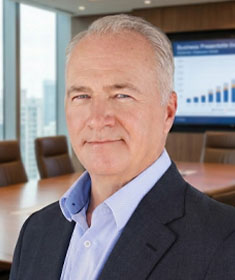
Brent McConnell
CISA
Brent McConnell served as CISA’s Senior Advisor for International Affairs, CISA’s Director for International Operations, and CISA’s Chief Compliance Officer, overseeing international operations for a 3,300-person agency, and advising CISA senior leadership on international cyber strategy. He is an executive leader with 35 years of experience in U.S. and global security, specializing in cybersecurity, compliance, export control, critical infrastructure protection, capacity building, and advanced weapons technology policy.
Brent is a retired U.S. Air Force Officer, retired intelligence officer, Korean translator, and Pentagon Technology Security Senior Executive. He has directed high-stakes negotiations with global powers including China, India, Korea, Japan, and Israel; managed multimillion-dollar operations and multibillion-dollar programs; and forged strategic partnerships across NATO, EU, ASEAN, and 25+ nations. He recently led U.S. delegations to wartime Ukraine, delivering cybersecurity technologies and training under active conflict conditions.
Brent was awarded the Pentagon’s highest civilian medal three times and CISA’s Leader of the Year for his leadership in high-risk and complex environments. His decades of work with the U.S. Congress, White House and National Security Council continues to form the foundation for U.S. approaches to advanced weapons technology security.
In parallel with his operational leadership, Brent actively contributes to global technical and diplomatic education. He serves as an Adjunct Professor at the George C. Marshall European Center for Security Studies, the U.S. Department of State’s Foreign Service Institute, and the Pentagon’s Asia-Pacific Center for Security Studies, where he educates senior military officers, diplomats, and policymakers on cybersecurity, technology security, and export controls.
Brent holds a Master of Arts in Organizational Leadership from George Washington University and a Master of Arts in Theology from Dallas Theological Seminary. He has completed executive programs at Harvard University’s Kennedy School of Government and the University of Virginia’s Darden School of Business. His career reflects an integration of operational experience, strategic policy leadership, and international diplomacy in the fields of national security, critical infrastructure protection, and advanced technology security.